Source Spiral Landscape Garden Sod Staples for Weed Control
Compare 26 spiral landscape garden sod staples from verified suppliers in China. Buyers can evaluate galvanized steel options, custom lengths, and pricing for garden weed barriers and sod installation projects; compare the available evidence and request quotations based on your requirements.
Key considerations
Products List


Comprehensive Sourcing Guide
Spiral Landscape Garden Sod Staples Sourcing Guide
Sourcing spiral landscape garden sod staples requires a nuanced understanding of material durability and installation mechanics. These fasteners are critical for securing sod, weed barriers, and erosion control mats in diverse garden environments. Buyers must prioritize products that offer both tensile strength and corrosion resistance to ensure long-term stability. The spiral design provides superior holding power compared to straight nails, preventing displacement from wind or foot traffic. Understanding the specific mechanical advantages helps in selecting the right product for high-traffic or steep terrain applications.
Procurement decisions should be guided by observed market signals and verified technical specifications. Listings often highlight customization options, varying thicknesses, and surface treatments like galvanization. Buyers need to distinguish between standard off-the-shelf items and custom-engineered solutions. The presence of multiple material grades, such as galvanized steel or #45 steel, indicates a broad supplier base. Evaluating these signals allows buyers to align their procurement strategy with project-specific requirements, ensuring that the selected staples meet both immediate installation needs and long-term environmental demands.
Product Scope and Observed Listing Signals
The market for landscape staples exhibits significant variation in product attributes and packaging. Observed listings indicate a wide price range, reflecting differences in material quality, surface treatment, and order volume. Buyers should note that customization is widely available, allowing for specific length, width, and thickness adjustments. Common specifications include thicknesses ranging from 2.2mm to 8.0mm and lengths from 10cm to 30cm. Packaging varies from individual plastic bags to bulk cartons and pallets, impacting logistics and storage efficiency.
Supplier origins are primarily concentrated in regions like Shandong and Tianjin, China. These hubs offer competitive manufacturing capabilities for steel-based fasteners. Listings frequently mention standards such as ISO, ANSI, JIS, and DIN, suggesting adherence to international quality benchmarks. However, buyers must verify these claims against specific product datasheets. The availability of free samples and OEM services provides opportunities for quality assessment and brand alignment. Understanding these market dynamics helps buyers navigate the diverse offerings and identify suppliers who can meet their specific technical and commercial requirements.
Technical Specifications to Verify
Verifying technical specifications is crucial for ensuring the performance and longevity of landscape staples. Key attributes to confirm include material composition, surface treatment, and dimensional accuracy. Galvanized steel is a common material choice, offering enhanced corrosion resistance. Surface finishes may include polished, hot-dip galvanized (H.D.G), or bright finishes, each providing different levels of protection. Buyers should request detailed material certificates to verify the steel grade, such as #45 steel, which offers specific mechanical properties. Dimensional verification ensures that the staples fit the intended sod or barrier thickness.
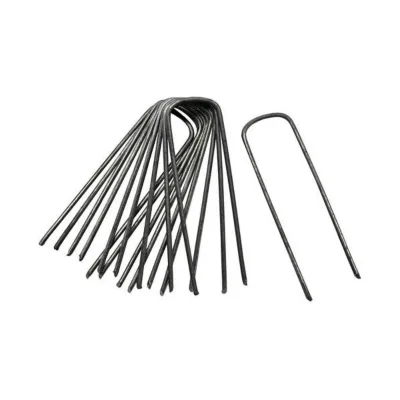
Shank and point design significantly influence installation ease and holding power. Smooth shanks with cut points are common, facilitating penetration into soil without excessive resistance. Buyers should assess the spiral pitch and wire diameter, as these factors determine the staple’s grip and durability. Length and width variations, such as 1/2 inch to 4 inch or 6" to 8", must align with project specifications. Additionally, headless designs are prevalent, requiring specific installation tools. Confirming these details with suppliers prevents mismatches and ensures efficient installation processes on-site.
Compliance and Safety Documentation
Compliance with international standards is essential for ensuring product quality and safety. Buyers should verify that suppliers adhere to recognized standards such as ISO, ANSI, JIS, and DIN. These standards provide guidelines for material properties, manufacturing processes, and testing procedures. Documentation should include material test reports and surface treatment certifications. For galvanized products, verifying the zinc coating thickness and adhesion is critical for corrosion resistance. Buyers must ensure that the supplied documentation matches the specific product batch and order specifications.
Safety considerations during installation and use are also important. While landscape staples are generally safe, proper handling procedures should be followed to prevent injury. Buyers should inquire about any specific safety data sheets (SDS) provided by the supplier. Additionally, compliance with environmental regulations regarding material sourcing and manufacturing processes may be relevant. Ensuring that suppliers maintain transparent and accurate documentation helps mitigate risks and ensures that the products meet regulatory requirements in the destination market. This diligence supports sustainable and responsible procurement practices.
Cost Drivers and Commercial Terms
Several factors influence the cost of landscape garden sod staples. Material costs, particularly for steel and zinc coatings, are primary drivers. Surface treatments like galvanization add to the production cost but enhance durability. Order volume significantly impacts pricing, with lower minimum order quantities (MOQ) often resulting in higher unit costs. MOQs can range from 100 pieces to 3 tons, depending on the supplier and product customization. Buyers should negotiate based on projected annual volumes to secure favorable pricing.
Commercial terms such as FOB, CIF, and EXW affect the total landed cost. Payment terms, including LC or TT deposits, also play a role in cash flow management. Lead times typically range from 15 to 30 days, influencing inventory planning. Buyers should consider the total cost of ownership, including shipping, handling, and potential customs duties. Comparing quotes from multiple suppliers while considering these variables helps in making informed cost-effective decisions. Transparent communication regarding all cost components ensures accurate budgeting and avoids unexpected expenses.
Supplier Qualification and Quality Control
Qualifying suppliers involves assessing their manufacturing capabilities, quality control processes, and market reputation. Buyers should verify the supplier’s production facilities and equipment to ensure consistent quality. Inquiring about their quality control protocols, including inspection stages and testing methods, is essential. Suppliers who offer free samples allow buyers to physically assess product quality before committing to large orders. OEM acceptance indicates flexibility in meeting specific design and branding requirements.
Market presence and customer feedback provide insights into supplier reliability. Suppliers serving markets like America, Japan, Panama, and South Africa demonstrate experience in diverse regulatory environments. Buyers should request references or case studies to validate the supplier’s performance. Establishing clear communication channels and defining quality expectations upfront helps prevent misunderstandings. Regular audits or third-party inspections may be necessary for high-volume orders. Building a strong relationship with qualified suppliers ensures a steady supply of high-quality landscape staples.
Long-Term Procurement Checks
Long-term procurement success depends on continuous monitoring and relationship management. Buyers should regularly review supplier performance against agreed-upon metrics, including quality, delivery, and responsiveness. Periodic re-evaluation of market prices and material costs helps in negotiating favorable terms. Maintaining a diversified supplier base mitigates risks associated with single-source dependencies. Regular communication with suppliers fosters collaboration and innovation, potentially leading to improved product offerings or cost savings.
Adapting to changing project requirements and market trends is crucial for sustained procurement efficiency. Buyers should stay informed about industry developments, such as new materials or installation techniques. Updating procurement strategies based on feedback and performance data ensures alignment with organizational goals. Documenting lessons learned and best practices supports continuous improvement. By proactively managing supplier relationships and staying agile, buyers can secure a reliable supply of high-quality landscape garden sod staples, supporting successful project outcomes.
FAQs
What materials are used for spiral landscape garden sod staples?
Spiral landscape garden sod staples are typically manufactured from galvanized steel or #45 steel. These materials provide the necessary tensile strength to secure sod effectively. Some variants use iron with galvanized or bright surface finishes. The choice of material ensures durability against environmental exposure while maintaining structural integrity during installation in garden beds.
Can I customize the dimensions of spiral landscape garden sod staples?
Yes, customization is available for spiral landscape garden sod staples. Buyers can specify lengths ranging from 10cm to 30cm or 1/2 inch to 12 inches. Widths can be adjusted between 2.0cm and 4.0cm. Thickness options include 2.2mm up to 8.0mm. OEM services are accepted to meet specific project requirements and installation needs.
What is the typical MOQ for ordering spiral landscape garden sod staples?
The minimum order quantity varies by supplier and product type. Some suppliers accept an MOQ of 100 pieces, while others require 3 tons for bulk industrial orders. The range generally spans from 1 to 20,000 units depending on the specific model and packaging configuration. Buyers should verify the exact MOQ with the manufacturer before placing an order.
Which standards apply to spiral landscape garden sod staples?
Spiral landscape garden sod staples may comply with ISO, ANSI, JIS, GB, and DIN standards. Specific models like SJ-003 or SOD 04 follow these international guidelines. Buyers should contact suppliers to obtain and customize standard compliance details. Ensuring adherence to relevant standards guarantees product quality and suitability for specific regional construction or landscaping regulations.
How are spiral landscape garden sod staples packaged for shipment?
Packaging options include boxes, plastic bags, cartons, and pallets. Common configurations are 50lb per box or 500 to 1000 pieces per carton. Pallets may hold up to 60 cartons for efficient logistics. This structured packaging protects the staples during transit and facilitates easy handling and storage at the destination site for garden and landscaping projects.
What is the lead time for spiral landscape garden sod staples?
The delivery lead time typically ranges from 15 to 30 days. This timeframe allows for production, quality control, and logistics arrangement. Buyers should confirm the exact schedule with the supplier based on order volume and customization requirements. Timely planning ensures that materials arrive when needed for garden sod installation and landscape maintenance projects.